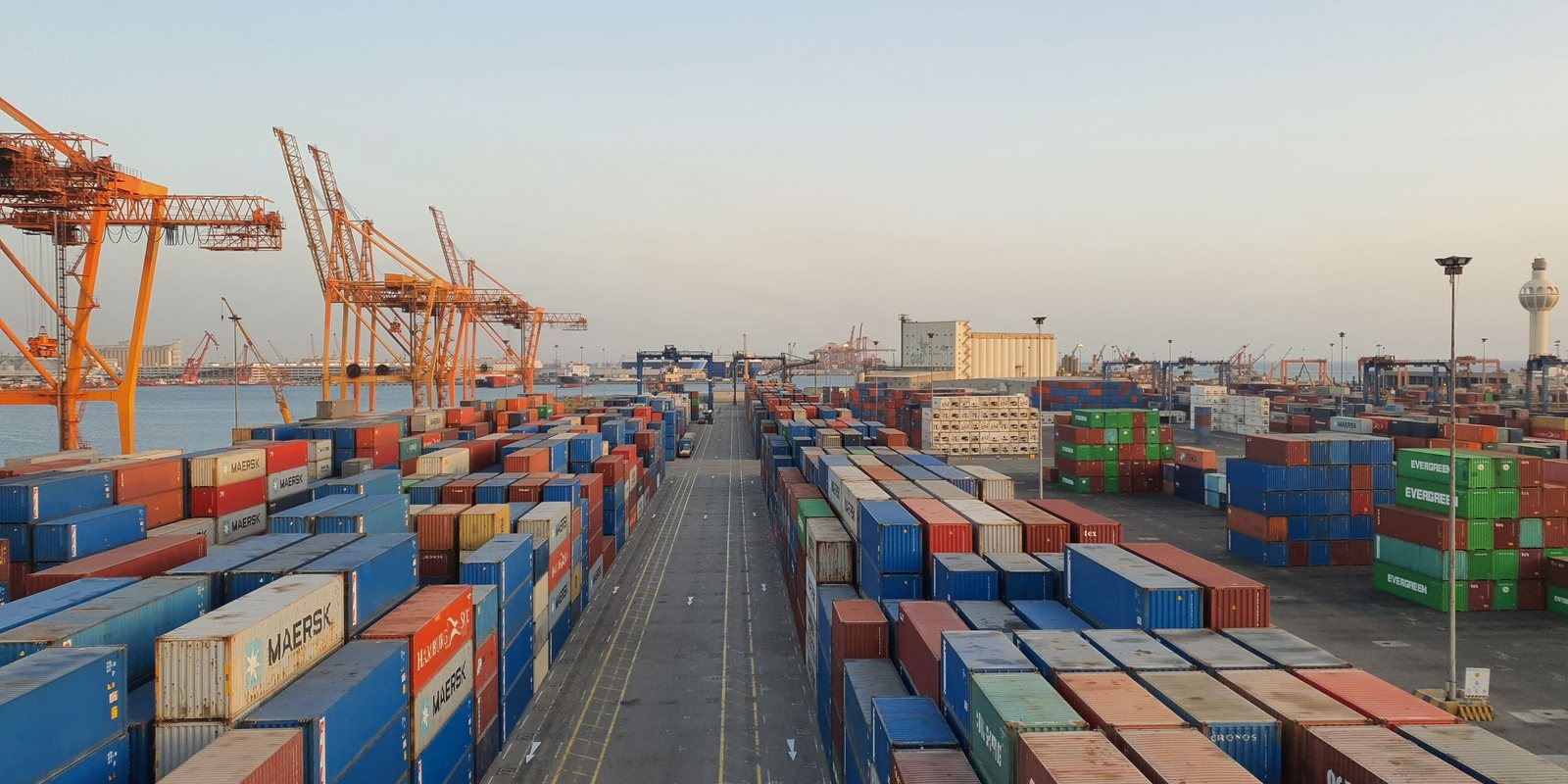
Sales agents, importers-distributors, wholly owned subsidiaries, e-commerce or hybrid models: lessons from my own experience.
When a company decides to expand into a new international market, discussions often start with the same questions:
Who will find us customers? Which distributor should we choose? What margin should we offer? How much should we invest in marketing?
Over time, I have come to a much more important question:
Who will actually invest in developing the market, who will bear the risk, and how can we ensure that every euro invested delivers results?
I have had the opportunity to experiment with different models, both as an exporter and as an importer-distributor.
One thing has particularly struck me: selling an established brand with existing awareness and proven demand is fundamentally different from launching an unknown brand that still has to convince its first customers.
That difference radically changes the economics of market entry.
Here are my lessons from the field.
1. The sales agent paid exclusively on commission
This is often the first option considered by companies looking to export without taking on too much risk.
On paper, it sounds ideal: no fixed salary, no local structure, and remuneration linked to sales generated.
Indicative investment: €0–20k per year, excluding commissions and depending on travel, trade fairs, samples and marketing activities paid for by the exporter.
These figures are illustrative estimates, not universal market rates.
The problem is simple: an agent paid exclusively on commission earns nothing until the market generates sales.
Yet developing a market can take 12, 18 or even 24 months. It requires identifying the right contacts, arranging meetings, presenting products, testing prices, convincing distributors, overcoming regulatory hurdles and supporting the first orders.
All this work takes place before the first commission is earned.
The agent must also choose between different clients, brands and opportunities. Naturally, they will tend to prioritise products that are easier to sell, established brands and shorter sales cycles.
I do not consider this model inherently bad. It can be highly effective when activating an existing network, selling an established brand or quickly identifying potential customers and distributors.
However, expecting an agent paid only on results to build a market from scratch, without a fixed fee or dedicated resources, is often more wishful thinking than a genuine market development plan.
There is also a governance risk. In some situations, an agent may receive undisclosed benefits from distributors they recommend, inflate expense claims or lack transparency regarding marketing expenditure. These practices are certainly not universal, but they can become costly in the absence of proper controls.
My takeaway: what costs almost nothing on paper does not necessarily deliver results.
When the agent is not genuinely committed to developing the brand, the exporter may lose valuable time, commercial opportunities and, sometimes, control over the local strategy.
2. The traditional importer-distributor: the ideal partner… in theory
Every exporter dreams of finding a partner who knows the market inside out, proposes a clear go-to-market strategy and business plan, pays for orders upfront, handles regulatory registrations, manages warehousing and distribution, develops the right sales channels and invests in marketing.
In return, the distributor earns a distribution margin.
This is an excellent model when the brand already has awareness, proven demand and an attractive commercial positioning.
But what happens when the brand is unknown?
The distributor must finance inventory, tie up working capital, mobilise its teams, train salespeople, convince customers and invest in promoting a product whose potential has yet to be demonstrated.
Why would they take that risk when they probably have other, already profitable brands to develop?
They may agree, but request limited exclusivity, impose low minimum volumes, negotiate higher margins or simply fail to invest enough.
The exporter believes they have found a partner who will develop the market. The distributor, meanwhile, waits for sales to materialise before committing further resources.
Eventually, each party blames the other for a lack of commitment.
Indicative investment for the exporter: €10k–100k in the first year, depending on launch expenses, regulatory adaptations, samples, travel and marketing support. The investment can be considerably lower if the distributor genuinely assumes responsibility for all market development activities.
The main drawback is that the exporter loses some control over the commercial strategy, brand positioning, actual resale prices and allocation of marketing budgets.
It is also important to distinguish between a recommended retail price and the resale price actually set by the distributor, in accordance with applicable competition law.
This model works particularly well when the brand is already attractive. It becomes much less straightforward when demand still needs to be created from scratch.
3. Opening your own subsidiary: maximum control, but at what cost?
This is often the preferred approach for international groups.
They replicate a model that has worked elsewhere: establish a local company, recruit a managing director and sales team, perhaps add marketing staff, a warehouse and administrative functions.
The advantages are obvious: direct control over strategy, close customer relationships, control over commercial execution and access to first-hand market intelligence.
But there is a catch: fixed costs start running from day one, while revenue is far from guaranteed.
Indicative investment: €300k–500k in annual overheads for a small commercial subsidiary in certain markets, excluding the cost of goods, exceptional investments and any central costs recharged by the group.
The company must then finance working capital, inventory, customer receivables, commercial launches and potential losses during the first years.
At this level of overhead, I generally consider it risky to establish a wholly owned subsidiary below approximately €5 million in annual revenue potential or sufficiently predictable annual sales.
This is not a universal rule. The threshold depends on margins, industry, cost structure and the market's strategic potential.
I have seen subsidiaries of major groups opened too hastily, with competent teams, substantial investment and genuine commercial ambition.
Yet year after year, they continued to generate losses.
Revenue failed to grow quickly enough to cover overheads. Budgets continued to be spent in the hope of an acceleration that never materialised.
And there is more.
A subsidiary buying and selling in different currencies is exposed to foreign exchange risk. Currency depreciation, higher procurement costs or unfavourable payment terms can turn a positive profit and loss account into a money pit.
Total control does not guarantee profitability. It mainly guarantees that you directly bear all the costs and risks.
Total control does not guarantee profitability. It mainly guarantees that you directly bear all the costs and risks.
4. E-commerce: a flexible solution, but not a magic bullet
E-commerce may appear to be a particularly attractive alternative for testing a foreign market.
There is no immediate need to recruit a local team, rent a warehouse or build a traditional distribution network. An online store, digital campaigns and suitable logistics can sometimes provide direct access to consumers.
When the regulatory and tax framework in the destination country is properly understood, e-commerce can indeed be flexible, gradual and relatively cost-effective.
It can be useful for testing demand, collecting customer data, refining positioning and validating markets before committing further investment.
But it should not be treated as a magic bullet.
Selling online does not exempt a company from the laws of the destination country. Customs, tax, regulatory, consumer protection, product liability, labelling, personal data and returns requirements may apply whether a product is sold online or offline.
The sales channel changes. The obligations do not disappear.
Companies must determine who acts as the official importer, who bears customs duties, who collects and remits VAT or local taxes, which return rules apply and how customer complaints are handled.
They must also anticipate delivery costs, customs clearance times, potential import restrictions, storage expenses, international returns and after-sales service.
A product may be easy to sell online from its country of origin but far less profitable once duties, taxes, logistics, customer acquisition costs and returns are included.
E-commerce can therefore reduce certain overheads, but it does not eliminate regulatory complexity or the need to build trust and demand.
My takeaway: e-commerce is a distribution channel, not a strategy for bypassing local regulations.
It can be an excellent entry point when the market is accessible, compliance requirements are understood and unit economics remain viable. It becomes much riskier when a company underestimates the destination country's customs and tax requirements.
E-commerce is a distribution channel, not a strategy for bypassing local regulations.
5. The hybrid model: investing in the market rather than in a structure
This is the model I find particularly interesting when a brand still needs to build demand, but the exporter wants to retain control over strategy and investment.
The principle is simple: the importer-distributor also becomes the operational partner responsible for developing the market.
However, the partner does not work solely in the hope of earning a distribution margin on future sales.
They dedicate time, resources and expertise to the exporter's brand, according to a jointly agreed development plan and budget.
The model is built around five mechanisms.
First: remunerate business development through a retainer fee
The exporter pays for the time genuinely dedicated to market development: prospecting, identifying customers and channels, preparing the commercial plan, negotiating, following up on prospects, training and coordinating local activities.
The retainer fee is set at €4k per month, or €48k per year.
This payment covers identifiable, budgeted activities rather than a mere promise of future sales.
It can be adjusted according to market size, the number of targeted channels, the level of support required and the resources mobilised.
Second: progressively add local sales resources
The hybrid model is not fixed or static.
Once the market begins to demonstrate its potential, additional local commercial resources can be introduced at the appropriate time.
These resources can be:
- Dedicated exclusively to the brand.
- Shared with other brands or activities to limit fixed costs.
- Mobilised through a V.I.E. arrangement, where appropriate to the market and subject to eligibility requirements.
- Deployed on a part-time or full-time basis, depending on actual commercial needs.
This flexibility allows the organisation to evolve progressively with the maturity of the market.
Instead of immediately recruiting a full team or opening a subsidiary, the exporter can start with the retainer fee and add a local resource when prospecting, customer follow-up or sales activation requires it.
The costs, objectives, scope of work and reporting arrangements for each resource should be defined in advance.
The benefit is twofold: strengthening local commercial presence while avoiding the premature creation of an oversized structure.
Third: control market development expenditure
Travel, demonstrations, trade fairs, samples, training and targeted campaigns are planned, approved and monitored.
The exporter knows exactly what is being funded, why it is being funded and which indicators will be used to evaluate results.
The marketing budget does not disappear into an opaque spending envelope. Every activity must support an identified commercial priority.
Fourth: initially finance inventory and operating costs, managed by the local partner
This is where the hybrid model differs from the traditional approach.
At the outset, the exporter can finance the inventory and operating costs required to launch the market.
The importer-distributor, meanwhile, manages the day-to-day operations: warehousing, order preparation, distribution, delivery, customer management and sales monitoring.
Why do this?
Because it can be unrealistic to expect a distributor to immediately finance the entire inventory and working capital requirements of a brand whose commercial potential has yet to be demonstrated.
The exporter therefore finances the launch, while the local partner contributes its infrastructure, teams, market knowledge and execution capabilities.
Responsibilities must be clearly defined by contract: inventory ownership, insurance, unsold stock, logistics costs, collection of customer payments, customer credit risk and exit conditions.
As sales grow, the revenue generated should progressively cover operating and distribution costs, allowing responsibility for inventory financing to be transferred gradually to the distributor, subject to the agreed terms.
The objective is to develop an economically self-sustaining business.
Fifth: progressively transition towards self-financing
At launch, the exporter finances business development and, where necessary, inventory and operating costs.
But this arrangement is not intended to continue indefinitely.
As sales increase, the gross margin actually generated must cover distribution costs, operating expenses and working capital requirements.
The model must be assessed in terms of margin and cash flow, not revenue alone.
The parties can then adapt their agreement: gradually transferring inventory financing to the distributor, adjusting the retainer fee, adding or reducing local sales resources, or revising operational responsibilities.
The exporter invests in creating the market; the local partner contributes execution, operational resources and market knowledge. The goal is to build a profitable business before progressively transferring more financial risk to the distributor.
6. The real advantage of the hybrid model: finding the right partner without paying to find them
This is an essential point and probably one of the most underestimated.
Under a traditional model, the exporter may spend substantial amounts searching for an agent, hiring a commercial recruitment firm, paying an international business development consultant or making repeated trips and trade fair visits to identify the right distributor.
And even after paying for that search, there is no guarantee that the selected partner will genuinely invest in developing the brand.
Under the hybrid model I am describing, finding the right partner can cost the exporter absolutely nothing in search fees.
The ideal partner is not simply an intermediary willing to represent a product. It is a business that already has:
- The commercial network needed to access the right customers and sales channels.
- The skills to develop and execute a realistic go-to-market plan.
- In-depth knowledge of the market, its practices, competitors and regulatory constraints.
- The operational resources to manage inventory, orders, distribution and customers.
- The ability to mobilise additional local sales resources when needed, whether shared, dedicated or through a V.I.E. arrangement.
- Above all, a genuine desire to develop the brand and build a profitable business over the long term.
Selecting such a partner still requires serious work: checking references, assessing financial capacity, analysing the network, conducting interviews and agreeing on objectives.
But when the right partner is found without search fees being charged to the exporter, the difference is considerable.
The company can then devote its resources to commercial development rather than simply searching for an intermediary.
Now compare this with the alternative: if the exporter decided to develop the local market independently, it would have to recruit the necessary expertise, finance travel, bear overheads and organise commercial operations.
The investment would often be of a similar magnitude, if not higher, without necessarily providing immediate access to the partner's network, local experience and operational infrastructure.
The hybrid model therefore gives the exporter access to capabilities already available in the market without having to recreate them internally from day one.
7. How much does the hybrid model actually cost?
Let's take an illustrative example.
- Retainer fee: €4k per month, or €48k per year.
- Annual budget for sales and marketing activities: €15k.
- Business development budget funded by the exporter: €63k per year.
- Initial inventory and operating costs: financed separately, according to market requirements and the agreed contractual arrangements.
- Additional local sales resources: introduced if needed, on a shared or dedicated basis, or through a V.I.E. arrangement, subject to applicable requirements.
- Operational management: handled by the importer-distributor.
The baseline development budget is therefore clear: €63k per year, plus inventory financing, agreed operating expenses and any additional local commercial resources.
It would be misleading to compare these €63k directly with the annual overhead of a subsidiary. Inventory, logistics, distribution costs, working capital requirements and any additional local resources must also be taken into account.
Nevertheless, the comparison is interesting.
With a subsidiary carrying €300k–500k in annual overheads, the exporter commits to substantial fixed costs before even validating the market's potential.
With the hybrid model, the exporter can start with a defined development budget, leverage the partner's existing capabilities, progressively add local sales resources and adjust commitments according to actual results.
This is not a risk-free model. It is a model in which the initial investment can be more targeted, measurable and adjustable.
8. Why I favour this approach for brands that still need to build their markets
In my view, the hybrid model offers seven major advantages for exporters.
- Access to a qualified partner without being charged search fees. The network, expertise and market knowledge already exist. The company does not necessarily need to recreate them internally.
- Control over the development budget. The €4k monthly retainer fee and commercial expenses are agreed in advance, with defined objectives and deliverables.
- Avoiding an oversized local structure. The exporter can test and develop the market without immediately taking on the fixed costs of a fully fledged subsidiary.
- Adding local resources at the right time. Local salespeople can be introduced progressively, on a shared or dedicated basis, or through a V.I.E. arrangement, according to the market's actual needs.
- Retaining greater strategic and commercial control. Priorities, channels, positioning and budgets are agreed jointly. The model also allows closer monitoring of actual selling prices, in compliance with applicable distribution rules.
- Aligning the partner's interests and efforts. The partner is remunerated for development work while retaining an economic incentive to generate profitable sales. Their commitment therefore does not depend exclusively on the next purchase order.
- Investing progressively according to results. Budgets, inventory, sales resources and responsibilities can evolve as the market matures, until the business becomes economically self-sustaining.
This model still requires sound governance: financial transparency, inventory monitoring, realistic targets, contractual responsibilities, clearly defined resources and explicit criteria for continuing, adjusting or stopping market development.
9. So, which model should you choose?
I do not believe there is one universally superior model.
For an established brand with proven demand and a strong distribution network, the traditional importer-distributor model may be the best option.
For a company looking to test a market at limited cost, a sales agent may be sufficient, provided their mission and resources are clearly defined.
For a brand already generating significant revenue and with proven potential, a subsidiary may become relevant if expected margins are sufficient to cover fixed costs and associated risks.
For a business with a product suited to direct sales, e-commerce can be an effective channel, provided the regulatory, tax, customs and logistics framework of the destination country is properly understood.
But for a brand that needs to create demand, develop its network and demonstrate its potential before justifying a permanent structure, the hybrid model deserves far more attention than it currently receives.
It allows a company to start with a lean organisation, invest progressively, maintain close commercial oversight, add local resources when necessary and adapt the arrangement according to actual results.
Ultimately, the question is not how to spend as little as possible on exporting.
It is how to fund the right activities, at the right time, with the right people, and how to ensure that every euro invested genuinely contributes to sales growth.
My conviction: in international business, the best partner is not necessarily the one willing to take all the risk. It is the one with whom you build a business model in which interests, resources and responsibilities are genuinely aligned.
What about you? Which international distribution models have you experienced, and what has genuinely worked in developing your markets?